
The Multiple Scheme Framework (MSF) changed the way non-government subscribers can invest in the National Pension System (NPS). Instead of choosing just one scheme, investors can now select multiple schemes and diversify across Pension Fund Managers (PFMs).
But greater choice also created a new challenge.
As PFMs started launching multiple NPS MSF schemes, each came with its own name and investment positioning. For an investor, it was not always easy to understand whether two schemes from different PFMs were actually comparable.
PFRDA has now introduced a standardised framework for NPS scheme classification and naming. For investors, the objective is simple: make NPS schemes easier to understand and compare.
What are the new MSF scheme categories?
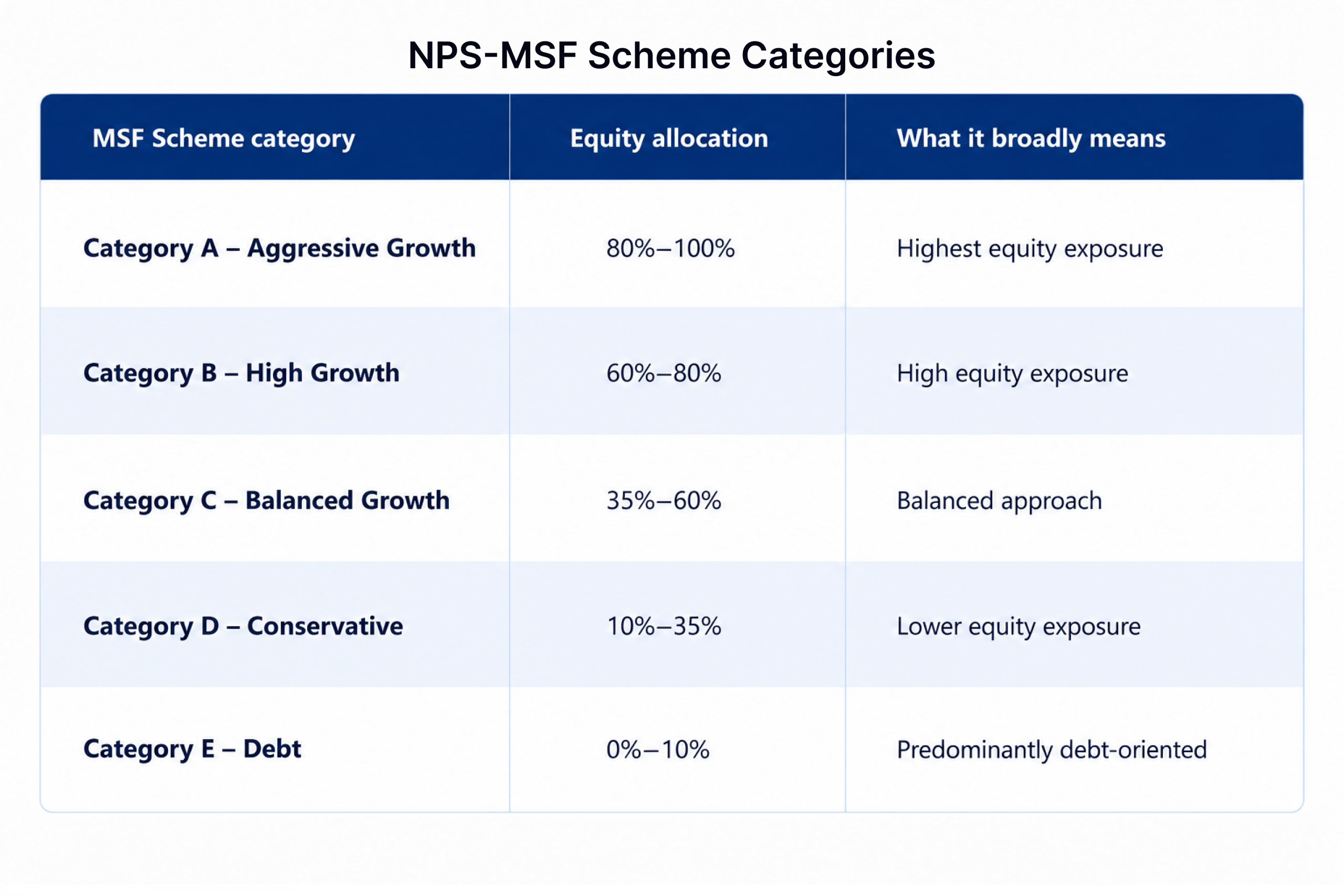
Under the new framework, MSF schemes will be classified into five categories based on their permitted equity allocation.
This gives investors an immediate understanding of the broad NPS investment, strategy and equity exposure of a scheme.
For example, someone looking for a high-growth portfolio can begin by looking at Category A or B. An investor looking for a more balanced approach can consider Category C, while those seeking lower equity exposure can look at Category D or E.
The category does not tell you which scheme is better. It tells you what kind of scheme you are comparing.
Why does this make NPS scheme comparison easier?
Before this standardisation, different PFMs could use very different names and descriptions for their schemes. An investor could therefore find two schemes with completely different names without immediately knowing whether they followed similar investment strategies.
The new classification creates a common starting point.
PFRDA has also standardised the naming structure for MSF schemes. The name will broadly include the Pension Fund abbreviation, NPS, the MSF category and the scheme name, with Tier II schemes additionally identified as Tier II.
This means investors can identify the broad category from the scheme name itself instead of having to decode the branding first.
The category becomes the first filter; the individual scheme becomes the next level of comparison.
How should investors compare NPS schemes?
Once an investor has identified the category that suits their risk appetite and retirement horizon, they can compare schemes within that category across PFMs.
PFRDA has also prescribed information such as historical returns, benchmark and comparative benchmark returns, charges, Riskometer, AUM and launch date to be presented to subscribers.
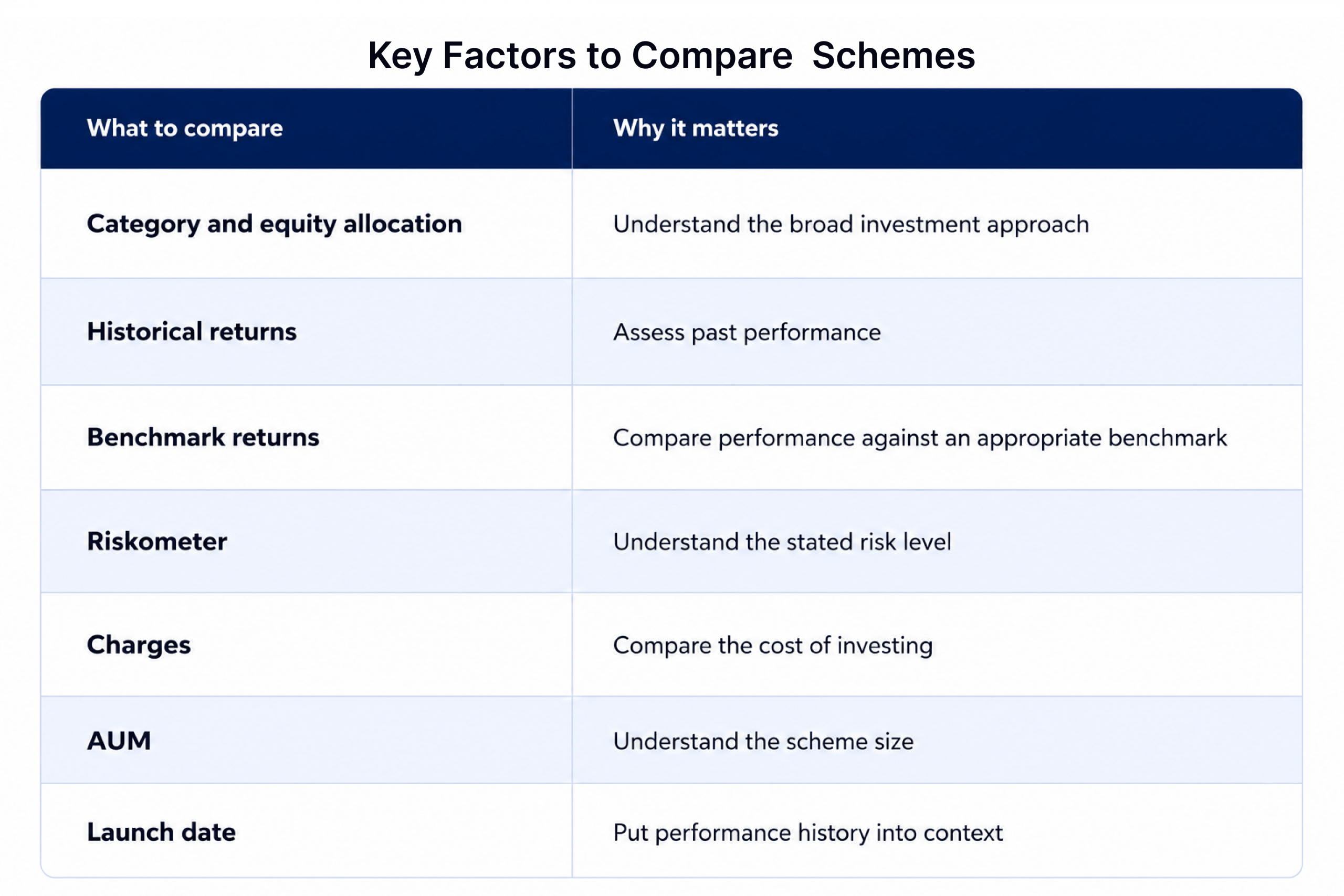
It is important to remember that two schemes within the same category will not necessarily perform similarly. Their portfolios, investment decisions and returns can still differ.
The benefit of standardisation is that investors now have a more meaningful basis for comparison.
What does this mean for NPS investors?
The new framework does not mean investors need to change their existing NPS investments. Instead, it provides a clearer framework for evaluating NPS investment options, particularly for those using MSF to build a diversified portfolio.
The first question can now be, “What kind of investment strategy do I want?” The next can be, “Which schemes within that category are worth comparing?”
This is a better way to approach NPS than simply searching for the fund with the highest recent return.
An investor can consider their age, retirement horizon, risk appetite and existing investments before deciding what role a particular scheme should play in their overall NPS portfolio.
The significance of the latest change, therefore, goes beyond standardising names.
MSF gave NPS investors more choice. Standardised categories give them a simpler way to navigate that choice.
As NPS evolves, investors can increasingly move from selecting a single “best NPS scheme” to thinking about how multiple schemes can work together to create a diversified retirement portfolio.
The information above is based on PFRDA’s standardised framework for classification and presentation of NPS schemes issued in August 2026. Investors should refer to the latest scheme documents and applicable disclosures before making investment decisions.