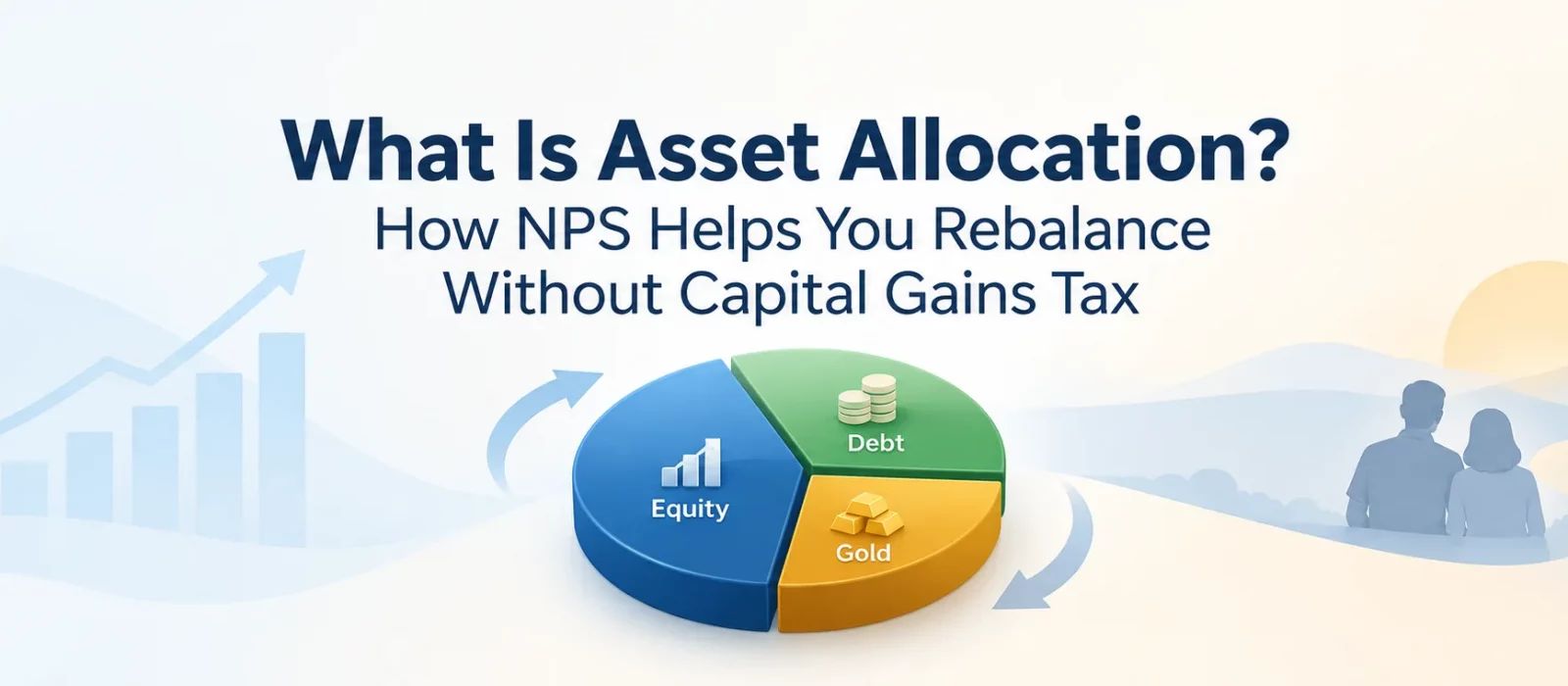
Asset allocation is the process of distributing your investments across different asset classes, such as equities, corporate bonds and government securities, based on your financial goals, investment horizon and risk appetite. In retirement planning, it becomes particularly important as your priorities and ability to take risks change over time.
The National Pension System (NPS) allows subscribers to adjust their portfolio allocation through permitted investment switches. Unlike selling investments in a regular taxable portfolio, these switches do not trigger capital gains tax merely because the allocation changes.
This makes NPS a useful option to consider for investors who want to manage their retirement portfolio as their needs evolve.
What is asset allocation in NPS?
Asset allocation is how you divide your investments across asset classes such as equity, corporate debt and government securities. Each asset class behaves differently: equities offer long-term growth potential but can be volatile, while debt investments can play a different role in balancing portfolio risk. The right mix depends on your goals, investment horizon, risk tolerance and financial circumstances.
For retirement planning, asset allocation is not a decision you make once and forget. The mix that suits you early in your career may not suit you as retirement approaches. This is where portfolio rebalancing becomes important.
Why does portfolio rebalancing matter?
Markets do not move in sync. If equity performs better than debt for several years, equities can become a much larger share of your portfolio than you originally intended. Your investments may then carry more risk than you planned for.
Rebalancing means restoring your portfolio to its intended asset allocation—or changing that allocation when your goals, time horizon or circumstances change. It is not about predicting market highs and lows. It is a disciplined way to keep your investments aligned with your plan.
Depending on the product, rebalancing can involve switching existing investments between asset classes, directing new contributions differently, or using both approaches. The aim is to follow a considered plan rather than react to every short-term market movement.
The tax hurdle that can delay a sensible decision
Outside structures such as NPS, selling an investment may create a taxable capital gain, depending on the asset, holding period and applicable tax rules. An investor may therefore postpone rebalancing—even when the portfolio has drifted away from the intended risk level—because they do not want to trigger a tax bill.
Tax should not be the only factor in an investment decision, and avoiding tax is not a good reason to keep an unsuitable portfolio. But tax friction can influence behaviour. Investors may know that an allocation needs to change and still delay the decision because of the tax consequences.
How does NPS make rebalancing more tax-efficient?
The National Pension System (NPS) offers a useful feature for long-term investors: permitted switches between asset classes within NPS do not trigger capital-gains tax merely because of the switch. Subscribers can review and adjust their allocation within the applicable NPS framework without the same capital-gains tax friction that may arise when selling investments outside the scheme.
This does not mean every NPS transaction or withdrawal is tax-free, or that subscribers should switch frequently based on market forecasts. NPS has scheme rules, investment limits and separate tax treatment for contributions and withdrawals. The advantage is narrower but important: when a permitted allocation change is appropriate, the switch itself does not create a capital-gains tax event.
For a wider explanation of tax efficiency across the NPS journey, read Floatr’s guide to the Triple Tax Advantage of NPS
What does this mean for retirement planning?
Retirement investing can span decades. Your capacity to take risk, time remaining until retirement and need for future income may change along the way. Reviewing your allocation can help keep the portfolio aligned with those changing circumstances.
For example, an investor may decide that their portfolio has become too heavily weighted towards equities after a period of strong market performance. Another investor approaching retirement may review whether the existing balance between growth assets and debt still fits their needs. There is no single equity-debt ratio that works for everyone; any change should reflect the investor’s circumstances, risk tolerance and plan.
The ability to make permitted allocation changes within NPS without capital-gains tax arising merely because of the switch can remove one obstacle to maintaining that plan. It is a feature worth considering alongside NPS’s other rules, benefits, liquidity restrictions and exit provisions.
How should you decide on your NPS asset allocation?
Start with your retirement goal, not a percentage copied from someone else. Consider how many years remain before you need the money, how much volatility you can tolerate, your other investments and income sources, and whether you will need to draw on the corpus soon after retirement.
Review your allocation periodically and when your circumstances materially change. Avoid frequent switches driven by short-term market forecasts. Before changing your allocation, check which investment options and limits apply to your NPS account.
If you are still estimating how much you may need for retirement, use the retirement planning calculator and guide to explore your potential corpus and investing needs under different assumptions.
For employees whose organisation offers NPS through payroll and need a broader explanation of the employee and employer model, read the complete guide to Corporate NPS.
See how asset allocation can make a difference
Understanding asset allocation is the first step. Seeing how allocation changes can affect a retirement portfolio over time makes the concept more tangible.
In a recent feature published in Moneycontrol, Floatr explores an NPS investment illustration using historical NAV data to demonstrate how six asset-allocation switches affected the portfolio. The feature highlights the role of disciplined asset allocation in long-term retirement planning and how permitted switches within NPS do not trigger capital gains tax merely because of the switch.
Read the full Moneycontrol feature: Rs 18 lakh in gains, zero tax on switches: Why NPS makes asset allocation guilt-free
The illustration is based on historical data and does not predict or guarantee future returns.
Frequently asked questions
1. What is asset allocation in NPS?
Asset allocation in NPS is how a subscriber distributes investments among the asset classes available under the applicable NPS option and rules. The appropriate mix depends on the subscriber’s goals, investment horizon and risk tolerance.
2. What is portfolio rebalancing?
Portfolio rebalancing means restoring an investment portfolio to its intended allocation or adjusting the target mix when goals, time horizon or circumstances change.
3. Can I change my asset allocation in NPS?
NPS subscribers may be able to change their allocation and pension fund subject to the options, limits and rules applicable to their account. Check the available choices before making a switch.
4. Does switching asset classes within NPS trigger capital-gains tax?
Permitted switches within NPS do not trigger capital-gains tax merely because of the switch. This should not be interpreted to mean that all NPS transactions or withdrawals are tax-free.
5. How often should I rebalance my NPS portfolio?
There is no universal frequency. Review your allocation periodically and when your goals or circumstances change materially. Avoid switching solely in response to short-term market movements.
6. Should I reduce equity exposure as retirement approaches?
It may be appropriate for some investors, but there is no single rule for everyone. Consider retirement timing, other income and assets, risk tolerance, planned withdrawals and the ability to withstand market losses.